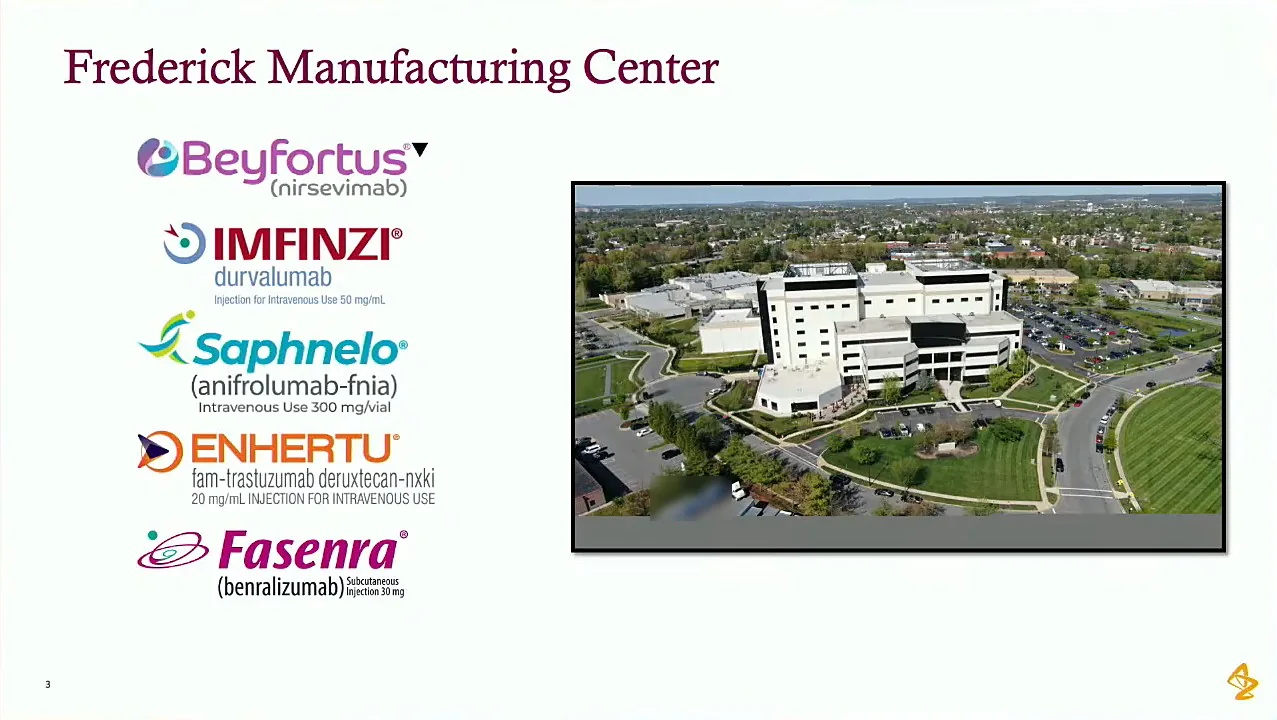
AstraZeneca puts patients first, and that reaches its plants. At the Frederick Manufacturing Center in Maryland, Danny Allen's XR work shapes how safely, efficiently and consistently the site delivers medicines. The site runs 24/7, 365 days a year, in a large-scale manufacturing building, and makes biologics including Beyfortus, Imfinzi, Saphnelo, Enhertu and Fasenra.
A biologic stays liquid from the first vial of cells to the end of the process, so the site runs on miles of piping and thousands of valves. Its technicians closed more than 5,000 preventive maintenance jobs last year, and one job can mean finding 50 to 60 of those valves.
Technicians now find them with the Valve Locator, a browser-based AR app that routes a phone to a named valve and puts the label on it. MultiSet is the visual positioning system underneath. Danny Allen, Associate Director of Digital Products - XR at AstraZeneca, presented the deployment at the Augmented Enterprise Summit in October 2026 and called MultiSet "the backbone of the whole solution".
| Site | Frederick Manufacturing Center, Maryland. Biologics, running 24/7 |
| Workflow | Finding valves for preventive maintenance in the gray spaces beside GMP suites |
| Scale | More than 7,000 valves tagged across multiple buildings and floors |
| Device | A phone, in the browser, with nothing to install |
| MultiSet's role | Localization, navigation mesh generation and occlusion |
| Result | 2.5x less time spent searching for valves, over 1,100 hours saved per year |
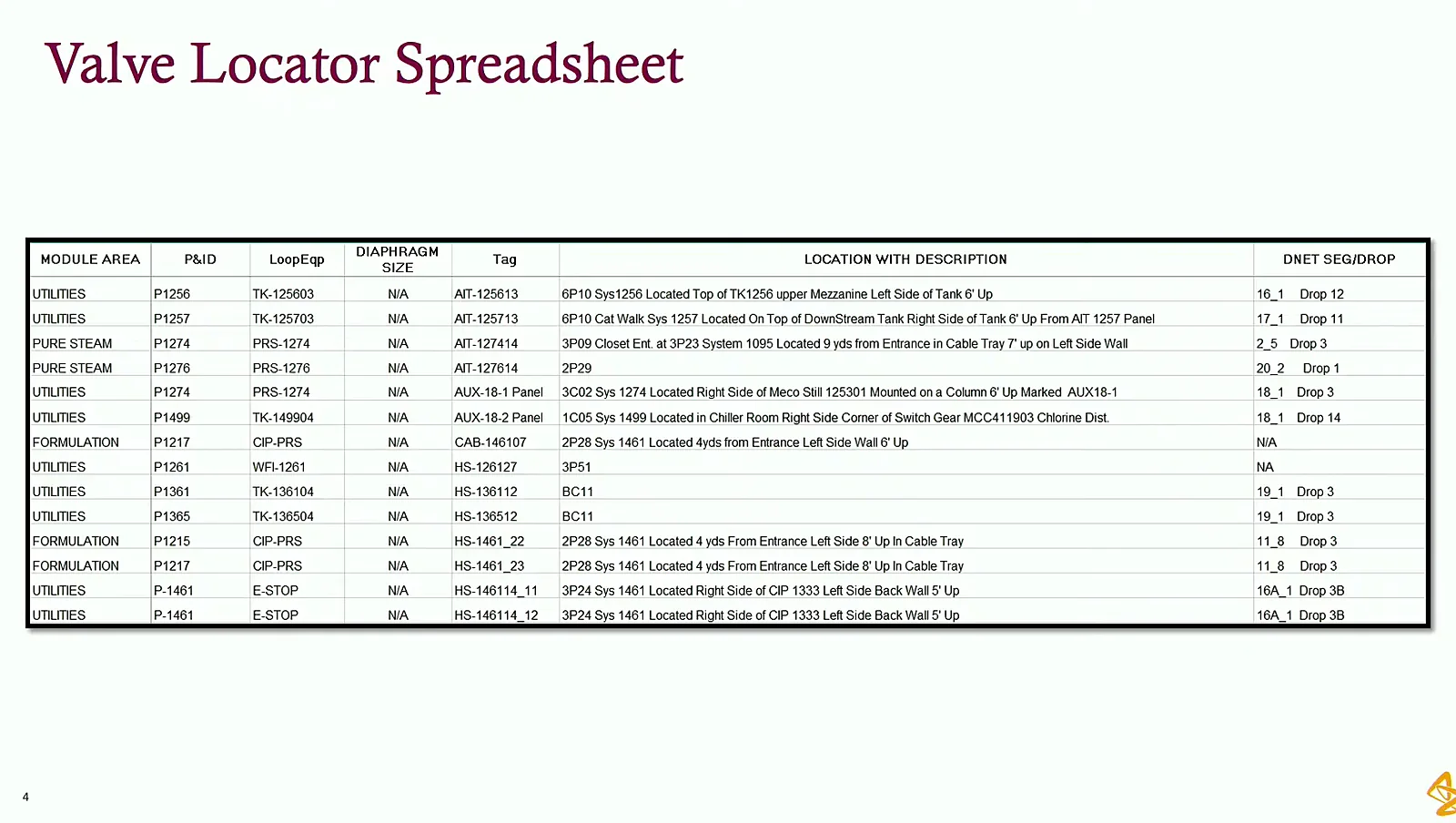
A technician used to have two ways to find a valve. One was the P&ID, a large schematic traced by finger and then matched to the room in front of them. The other was the valve locator spreadsheet, with a row for every valve in the building. Each row held the module area, P&ID, loop equipment, diaphragm size, tag, a written location and the DNET segment and drop. For valve HS146122 the location read room 2P28, four yards from the entrance, left side, eight feet up in the cable tray. That got a technician into the right area and left them checking valves one at a time.
At worst a single valve took hours, and sometimes a supervisor got pulled in to help. Two people were then looking for one valve before any maintenance had started.
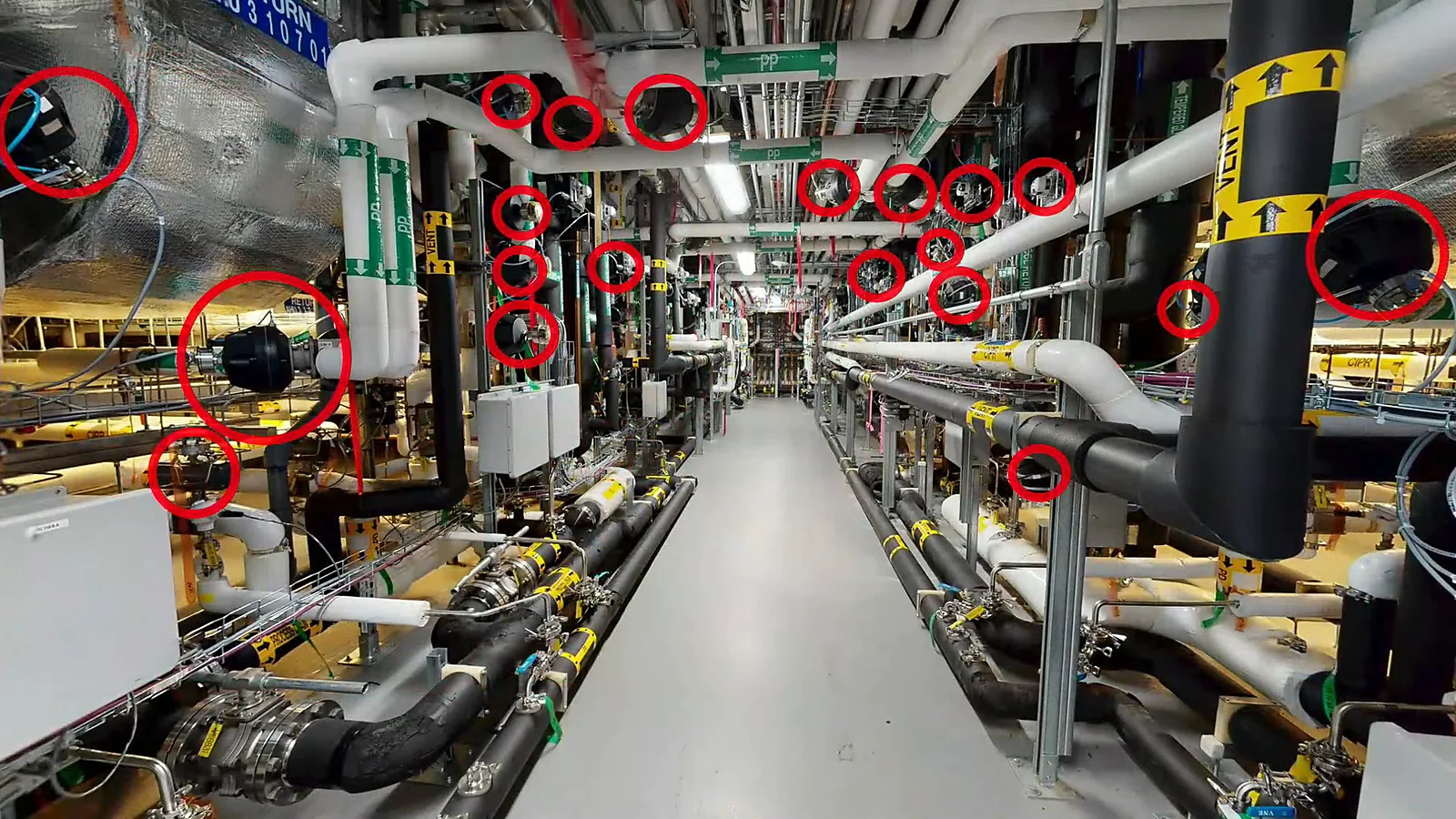
Most of this work happens in gray spaces, the technical areas beside the GMP manufacturing suites where technicians can work without gowning. The site has dozens of these rooms. A single corridor holds hundreds of valves, some 25 feet up in the ceiling and some tucked behind equipment.
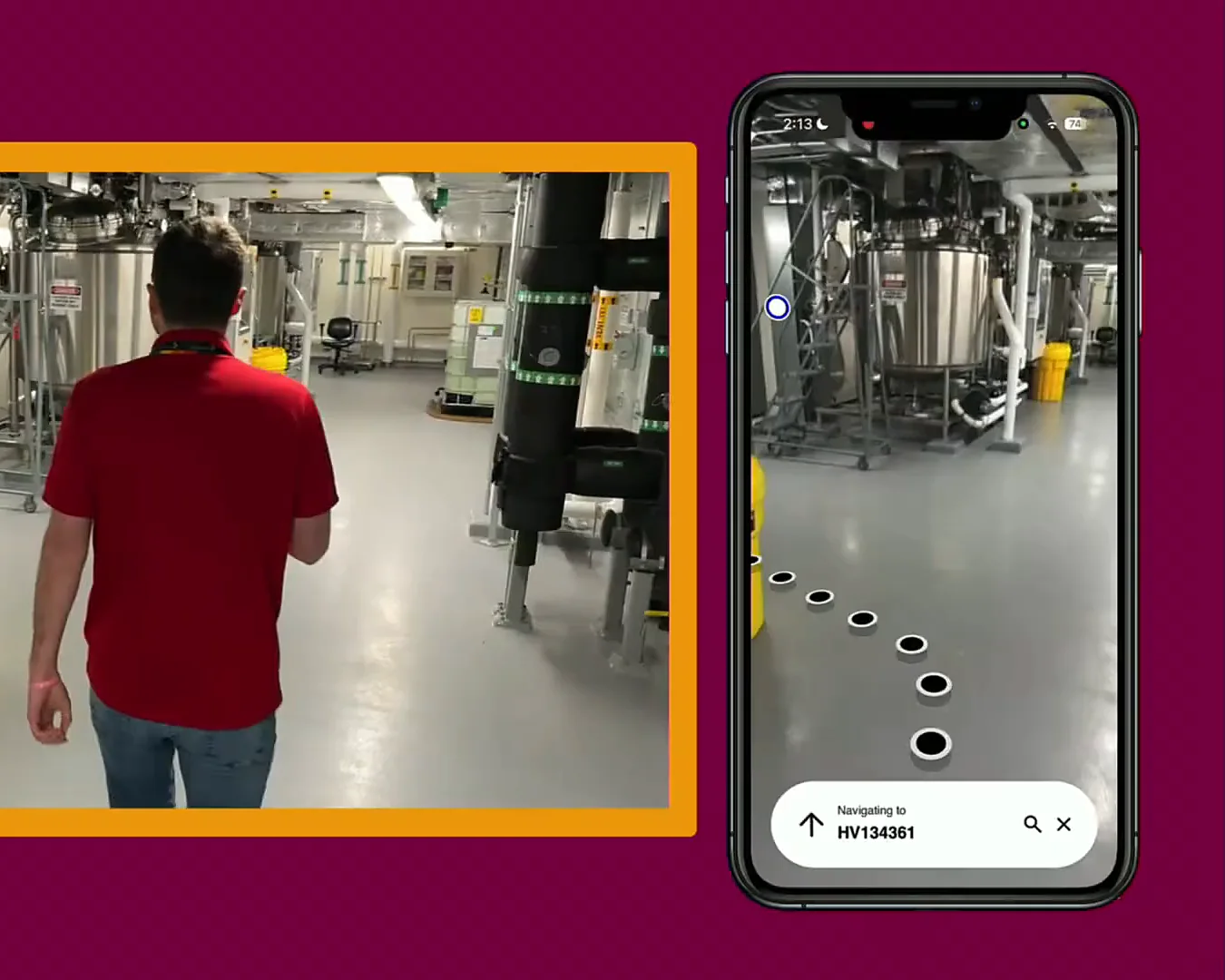
A QR code at the entrance to each gray space opens the Valve Locator in the phone's browser. The technician searches for the valve's tag and the phone localizes against the map of the room. A path appears on the floor and leads to the valve. Close in, the label sits on the valve itself, and arrows point the way when it is out of view. It works the way a maps app does, and new users learn it in minutes.
AstraZeneca's Valve Locator video, played during the session (4:33 to 5:14).
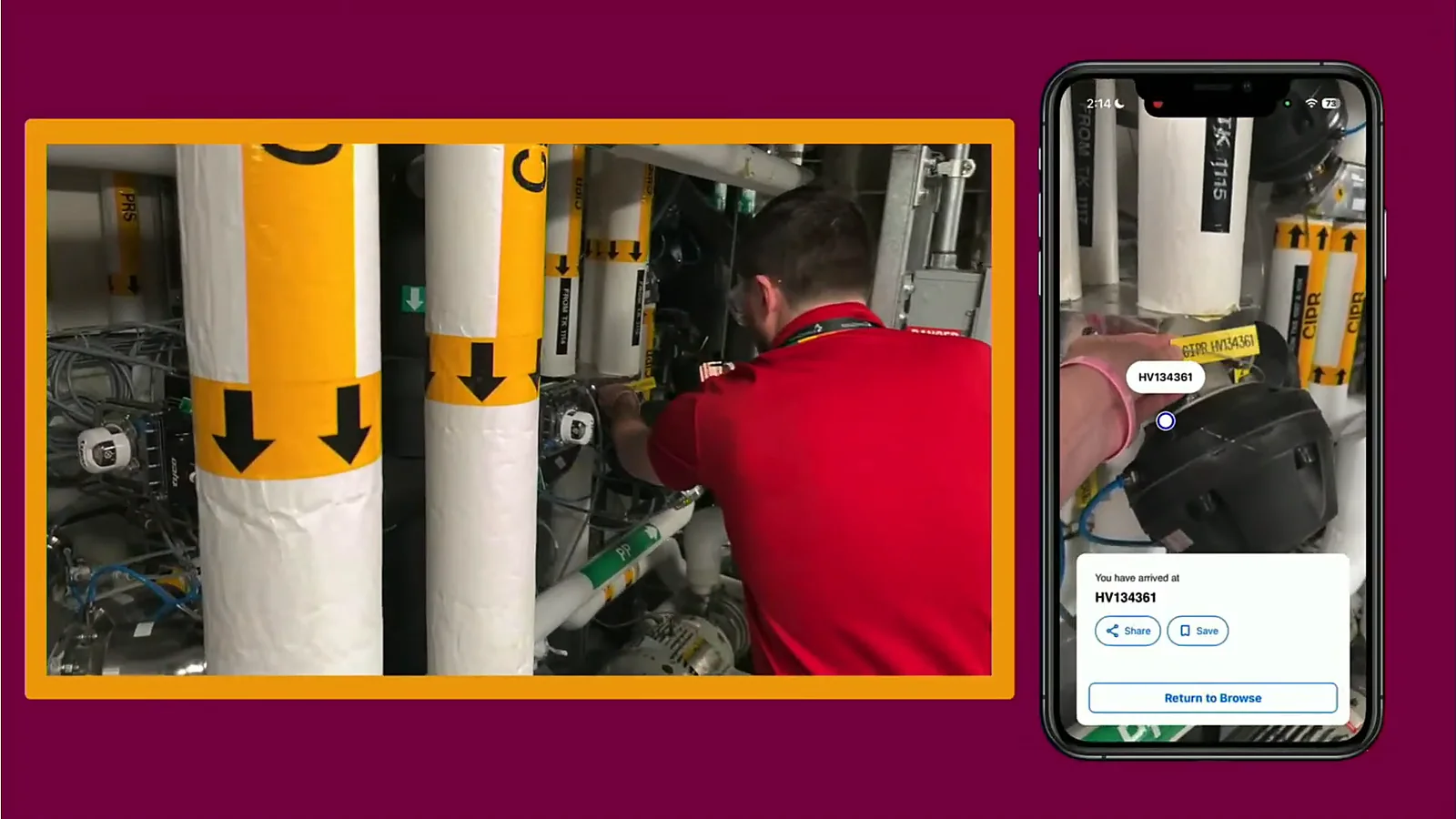
At arrival, the app's label for HV134361 sits beside the valve's own printed tag.
Danny's How We Did It slide listed four pieces.
| Piece | What it does at Frederick |
|---|---|
| Matterport | A quick scan of each room, producing panoramic images and a rough 3D model. Matterport is the foundation for much of the site's AR work |
| MultiSet | The visual positioning system. It provides localization, navigation mesh generation and occlusion |
| ZapWorks Spaces | Where every valve is tagged, and the browser-based app technicians open from the QR code at each gray space |
| Sweat equity | Finding and tagging more than 7,000 valves by hand |
Danny Allen on MultiSet as the VPS provider, AES 2026 (6:52 to 7:08).
MultiSet turns the room scans into a VPS map, the reference each camera frame is matched against. On stage, Danny named three of the jobs MultiSet does in the stack.
| What the technician sees | What MultiSet does |
|---|---|
| The phone knows where it is once the QR code is scanned | Localization. The camera frame is matched to the room's VPS map and returns the phone's position and orientation in the room |
| A path on the floor to the named valve | Navigation mesh generation. MultiSet derives the walkable space from the map, so routes follow aisles and pass around equipment |
| The label on the right valve, with pipework in front of it | Occlusion. The map's geometry hides a label behind solid objects, so a tag on a valve behind a pipe rack doesn't float in front of it |
No metric existed for the time it takes to find a valve. Maintenance tracked every preventive job from start to close, and the search sat inside that total. So the team built one. They split a group of technicians in two, gave one half the P&IDs and the spreadsheet and the other half the app, and timed both on the same five randomly chosen valves. The app group was using it for the first time and still finished far ahead. Before committing or paying, the team had proved the business case on a trial covering one entire room.
The measured results, from the session (5:24 to 5:45).
The Benefits slide listed four results.
| Result on the slide | Behind it |
|---|---|
| 2.5x reduction in the amount of time spent searching for valves | Compared with the P&IDs and the spreadsheet, the app is at least two and a half times faster |
| Over 1,100 hours saved per year | Extrapolated across 5,000 preventive maintenance jobs a year, on valve finding alone |
| Accelerated time to value | A new technician used to lean on senior staff for months. With the app they can find any valve on day one, including in rooms they have never entered |
| Increased job satisfaction | Hunting for valves was never the work anyone signed up for, and the mornings lost to it are gone |
The maps took a quick scan per room. Tagging took longer, because every valve had to be found in person before it could be placed on the map, more than 7,000 of them across multiple buildings, floors and manufacturing space. Once a valve was found, logging it took 30 seconds to a minute. For a couple of months Danny and one facilities and engineering technician went out each morning and logged a couple hundred.
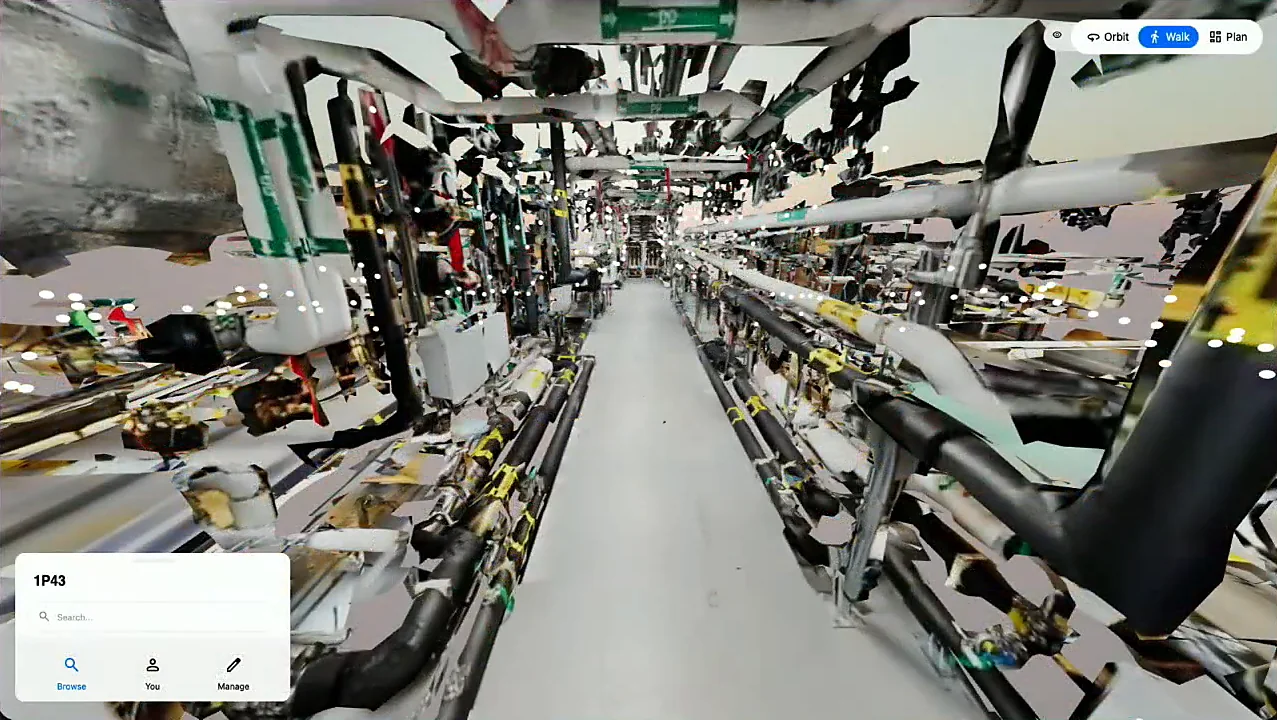
In the tagging view, each white dot on the corridor's 3D model is a tagged valve.
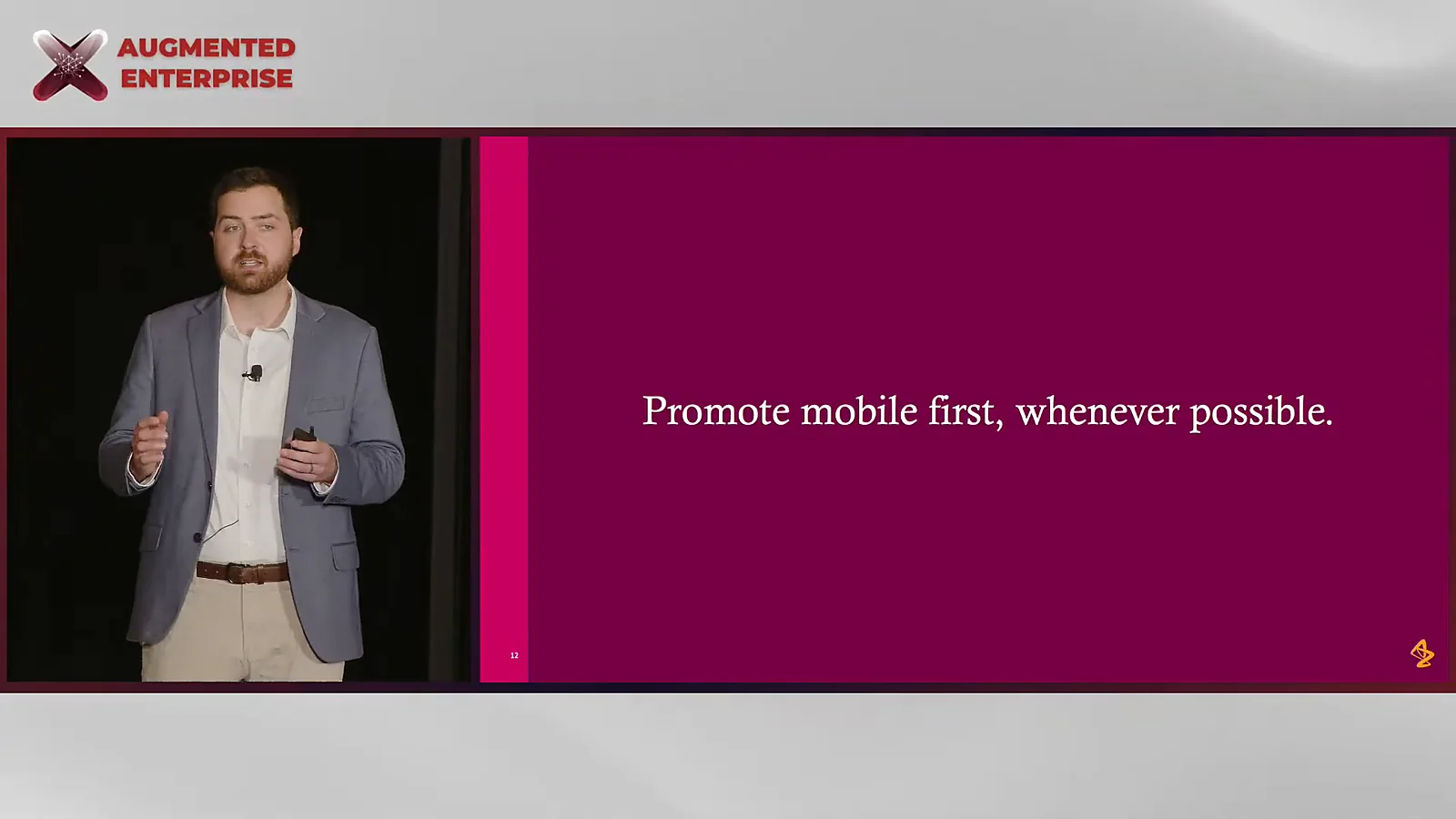
| Lesson, as titled on the slide | What happened at Frederick |
|---|---|
| Promote mobile first, whenever possible | Headsets handed to technicians before Danny joined made no progress for years. A phone was a smaller step for technicians new to XR |
| Not everyone will use it, and that's okay | Veterans who know the plant by heart may skip it. Newer technicians learn the job through it, so adoption keeps rising as time goes on |
| If a metric doesn't exist, make one | Nobody timed valve searches, so the team ran a timed trial to make the business case |
| Don't waste your social currency | A Wi-Fi problem on the site's corporate network made early users give up. After the fix, winning them back was an uphill climb |
| AR doesn't have to be perfect | Technicians want their valve. When a path cut a corner, they walked the corner the way they always had |
The Valve Locator uses the map for one job, getting a person to an asset. MultiSet builds maps from whatever capture a site holds, including E57 and LiDAR point clouds, 3D Gaussian splats, 360 video and panoramic scans, and localizes to a median error under 5 cm in mapped areas. For other pharma teams the same map carries line clearance checkpoints recorded with the position they were taken from, and inspection photos that the next visit can retake from the same spot. Object Tracking confirms which of several identical units is in front of a technician. Robots can localize in the same frame as the people working beside them.
Related: visual positioning for pharmaceutical manufacturing covers line clearance and inspection evidence on the same pattern. Object Tracking and map versioning cover the asset level and changeovers. Pharma teams can book a working session with our Life Sciences team.